

Swiss consumers pay a 88% mark-up for cancer drug Keytruda
Zurich, Lausanne, April 13, 2026
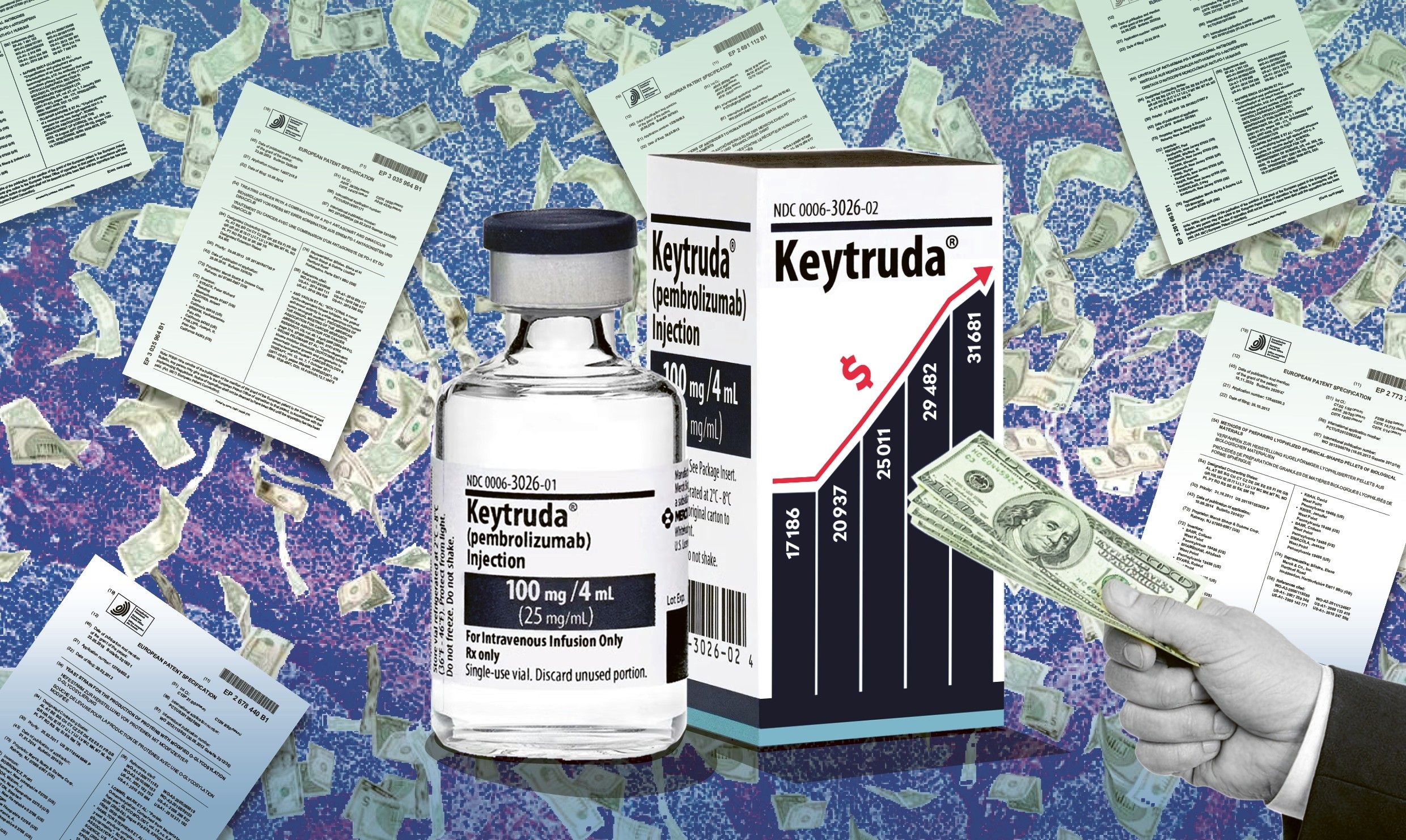
With sales of CHF 183.4 million, Keytruda was Switzerland’s most cost-intensive medicine in 2024, according to healthcare insurer Helsana. The official list price per pack for this cancer treatment is CHF 4,294 – more than the current value of an ounce of gold. Behind these eye-watering figures, and their persistence, lies a complex strategy uncovered by Public Eye and the ICIJ.
At its heart is the systematic accumulation of abusive patents – a practice already documented in two previous Public Eye investigations regarding Novartis and Roche. In Keytruda’s case, at least 80 primary and secondary patents could secure MSD a monopoly on this blockbuster of at least three decades, jeopardising access to these treatments. That is 10 years longer than what is foreseen by the World Trade Organization’s Agreement on Trade-Related Aspects of Intellectual Property Rights (TRIPS).
The pharmaceuticals industry routinely justifies its exorbitant prices – especially for cancer medicines – by pointing to costly research and development (R&D) and a high risk of failure. Two years ago, MSD’s chief executive put Keytruda’s R&D investment at $30 billion. Public Eye has thoroughly checked the numbers, based on MSD-sponsored clinical trials for the product, and has arrived at R&D costs of just $1.925 billion. That is a fraction (6.4 per cent) of the sum claimed by the company’s boss and represents only 1.2 per cent of Keytruda’s global sales to date. Even when allowing for possible failures, R&D costs account for barely 3 per cent of the global turnover.
MSD has turned Keytruda into a real cash machine, thanks to an opaque price-setting policy and abusive patent hoarding. Public Eye estimated that the profit margin generated by MSD on Keytruda sold in Switzerland is 88 per cent of the official price, which clearly contradicts the argument put forward by Big Pharma and the White House that prices are too low in Switzerland and Europe. If the surge in healthcare costs and insurance premiums is to be curbed, there is an urgent need for more rigorous scrutiny of patent applications to limit their number and greater transparency from Big Pharma and regulatory authorities in charge of price-setting.
For more information contact:
- Oliver Classen, Media director, +41 44 277 79 06, oliver.classen@publiceye.ch
- Patrick Durisch, Pharma expert, +41 21 620 03 06, patrick.durisch@publiceye.ch