

Free trade agreement with Malaysia: Public Eye supports the referendum
Zürich, Lausanne, June 30, 2026
 ©
Bruno Manser Fonds
©
Bruno Manser Fonds
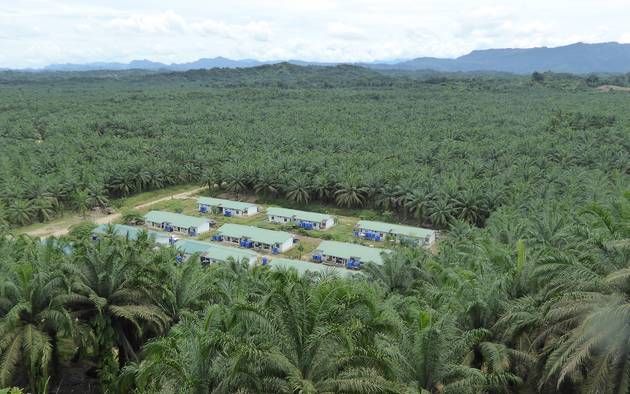
Under the EFTA–Malaysia free trade agreement, Switzerland is reducing its tariffs on palm oil and linking these reductions to certification requirements. The agreement therefore follows the same approach as the EFTA–Indonesia agreement, which entered into force in 2021. Public Eye and other organisations welcomed this approach in principle at the time, but warned that weak certification standards could undermine it. The Malaysia agreement likewise relies on certifications that cannot guarantee environmental protection, respect for human rights or the payment of living wages. There is also a significant risk that imports could stem from forced labour or deforestation.
In 2025, Malaysia was Switzerland’s second most important supplier of palm oil, which is notably used in processed foods, cleaning products and cosmetics. Tariff reductions on this raw material are expected to increase imports, which would further exacerbate the human rights and environmental problems associated with industrial palm oil production. It is therefore essential to ensure, at a minimum, that no palm oil linked to deforestation or forced labour enters Switzerland. In 2026, a minority in Parliament called for such accompanying measures to be introduced – to no avail.
Inadequate action against forced labour
As early as 2012, Parliament called for Malaysia to ratify the UN human rights conventions and the International Labour Organization’s core labour standards before negotiations were concluded. As of 2026, Malaysia has still not ratified the UN Covenant on Economic, Social and Cultural Rights, the UN Covenant on Civil and Political Rights, or several core ILO conventions. Due to insufficient efforts to combat the issue, forced labour has become increasingly widespread in Malaysia in recent years: in 2023, more than 200,000 people in the country were victims of modern slavery. Export-oriented sectors such as palm oil are particularly affected. Beyond the central issues related to labour law and human rights, there are a number of other arguments against reducing tariffs on palm oil.
Criticism of strict plant variety protection
Alongside the palm oil issue, Public Eye denounces Switzerland’s demand that Malaysia introduce strict plant variety protection laws, which are akin to patent protection and restrict farmers’ access to seeds. In the same vein, back in 2024, UN Special Rapporteur on the Right to Food Michael Fakhri urged Switzerland to renounce any such provision in its trade agreements. The right of farmers to save, exchange and sell seeds, Fakhri argued, must be guaranteed as an indivisible fundamental right and take precedence over intellectual property rights.
The Swiss coalition “Right to Seeds”, of which Public Eye is a member, has been campaigning against such provisions in Swiss trade agreements for years. In an open letter addressed to the EFTA ministers and signed by more than 250 organisations, the coalition denounced the obligation imposed upon Malaysia to protect plant varieties as totally incomprehensible. In this area, the country already has a solid legal framework, which largely respects the rights of farmers. Public Eye also criticises the excessive intellectual property measures imposed on Malaysia in the health sector. Tailored to serve the interests of the pharmaceutical industry, these measures risk restricting the population’s access to affordable medicines.
The “Alliance against Rainforest Destruction”, which brings together numerous organisations active in the fields of environment, climate, human rights, development and agriculture, launched the referendum against the free trade agreement on 30 June 2026. Alongside its partners, Public Eye intends to block this agreement and its harmful effects.