

Corruption Corruption in The Gambia: French authorities are investigating TotalEnergies’ Swiss oil subsidiary
Agathe Duparc and Karine Pfenniger, April 1, 2026
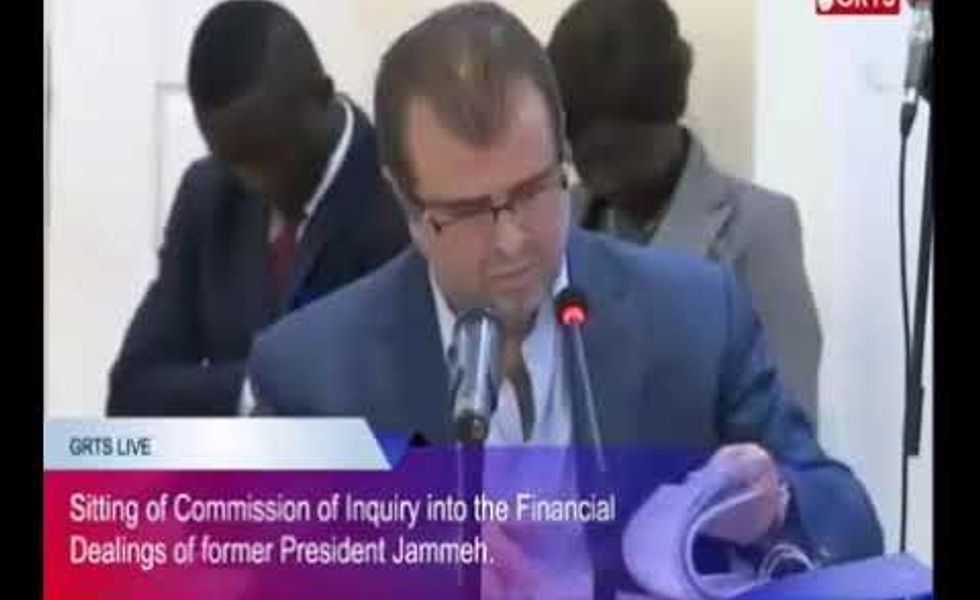
Wearing a blue suit and rectangular glasses on the tip of his nose, Mohammad Bazzi looks uncomfortable. For about half an hour, on 11 October 2017, the Belgian‑Lebanese has been slogging through questions from The Gambia’s anti‑corruption Commission of Inquiry. The committee members are grilling him about alleged wrongdoing by the country’s former president, Yahya Jammeh, suspected of siphoning off nearly a billion dollars during his more than 20-year rule (1994–2017). “It is difficult to tolerate ‘I don’t know, I will check’,” the committee chairman says, visibly losing patience with Bazzi. The businessman responds with a justification: “I'm not the guy on the ground. I'm not the person who running [sic] day‑to‑day business here. I came every month, maybe five days or six days, so I was not the guy on the ground.” While he was indeed not on the ground, Bazzi was somewhere else entirely – moving within the highest circles of power in The Gambia.
A special partner of the president
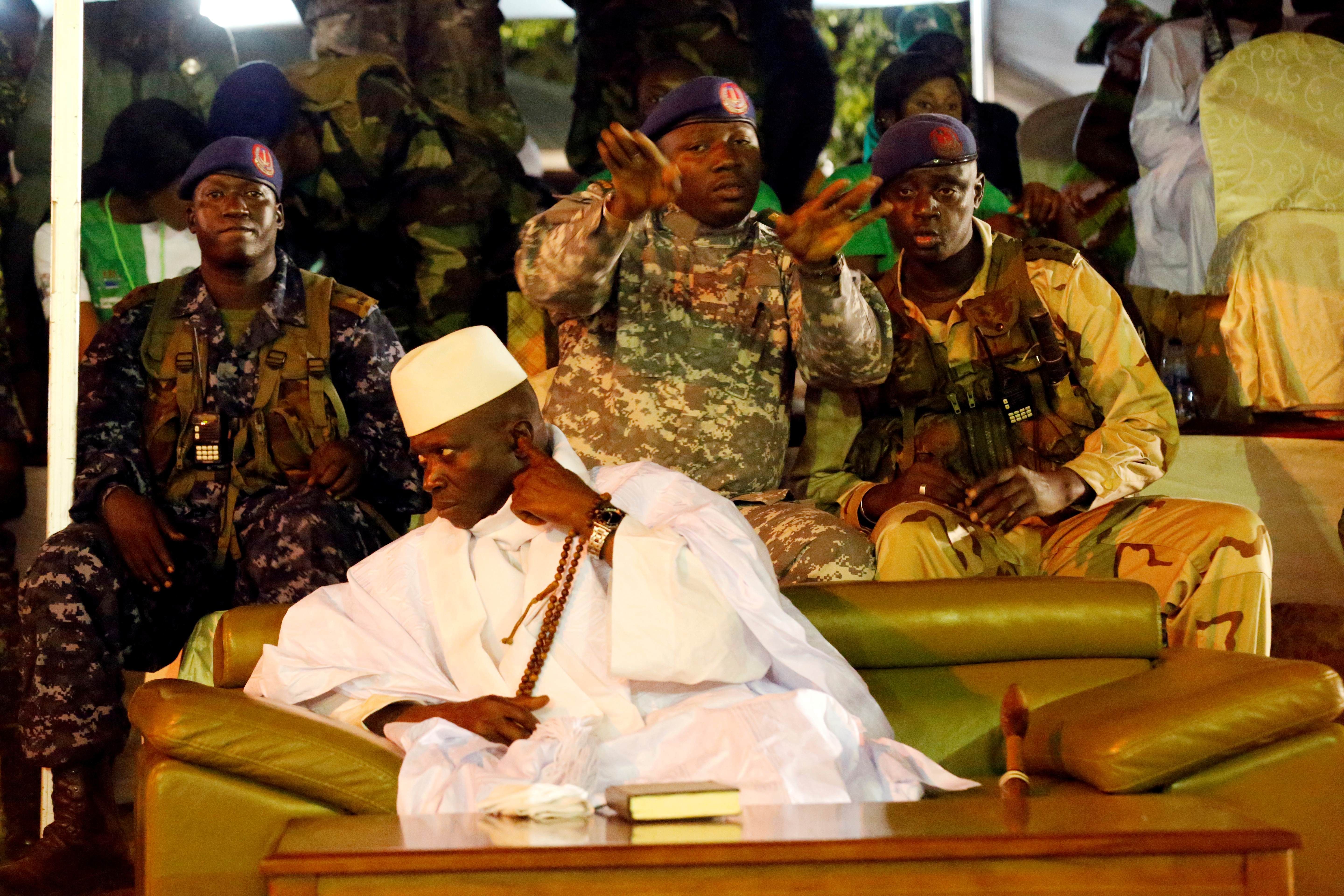
From the early 2000s to around 2015, Bazzi was among the close circle of dictator Jammeh, establishing himself as one of most influential entrepreneurs in The Gambia, the small East African country enclaved in Senegal. The Belgian‑Lebanese businessman, who served as the country’s honorary consul in Lebanon, secured lucrative contracts in mining, hydrocarbons and telecommunications – all areas that fall under the monopoly of the State. His good fortune, nonetheless, ended two years before his patron fell from power.
In 2018, a separate affair caught up with him: the US Office of Foreign Assets Control (OFAC) identified him as a key financier of Hezbollah and imposed sanctions on him and his companies. Arrested in Romania in 2023, Bazzi was imprisoned and the following year convicted in the United States for attempting to circumvent those sanctions, as reported by Gambian and international media. The businessman, whose assets were confiscated by the United States, was granted a sentence reduction in the spring of 2025 and is subject to a deportation order.
Throughout the various turns of Bazzi’s story, one aspect of the businessman’s trajectory has remained largely in the shadows: Bazzi’s close business ties, over the course of nearly a decade, with the French oil giant TotalEnergies (at the time known as Total) and its Geneva-based trading arm, TotalEnergies Trading SA (Totsa), in The Gambia. This subsidiary – which in 2024 reported €99 billion in revenue and €2.3 billion in profit – manages a large share of the group’s hydrocarbon sales.
Between 2004 and 2014 at least, Total supplied oil to this small West African country through Bazzi’s companies, which held exclusive rights to import petroleum products into The Gambia.
Totsa offices searched in Geneva
While the events described in this investigation may seem distant, they could still have ramifications for both TotalEnergies and Totsa. The French National Financial Prosecutor’s Office (PNF) confirmed that it opened a preliminary investigation into suspected corruption of a foreign public official. According to our information, the French authorities have been acting since autumn 2021 following a complaint against persons unknown filed by the non-profit Transparency International France. In this document, which Public Eye has seen, the NGO details the business relationship that developed from the 2000s between Total and several of Bazzi’s companies. The complaint states that the aim is for French justice to “identify the French private or legal persons who may have been involved in the corruption pacts concluded by the Gambian authorities,” or who may have “derived illicit profit” from them.
As we have also learned, Totsa’s offices in Geneva were searched in February 2024 at the request of the French prosecutor, and further mutual legal assistance requests have since been sent to Switzerland. Contacted by Public Eye, a spokesperson for the Office of the Attorney General of Switzerland confirmed that the federal prosecutor “is currently executing” the request for assistance from its French counterpart, although no criminal proceedings have been opened in Switzerland in connection with the case.
Until now, Swiss public attention has mainly focused on the bloody crimes of the Jammeh regime, notably through the high‑profile trial in Bellinzona of his former interior minister, Ousman Sonko. Sonko was convicted of crimes against humanity in the first instance and is set to be retried at a Swiss federal appeals court from late March. The PNF’s investigation into Totsa opens up a new chapter of the story, this one focused on systemic financial offences and corruption, which were systemic at the time. In a multi‑part investigation published in 2019, the Organized Crime and Corruption Reporting Project (OCCRP) estimated that at least $975 million had been diverted or looted by the president and his associates – including Mohammad Bazzi – over his 22‑year rule.
 ©
REUTERS/Thierry Gouegnon
©
REUTERS/Thierry Gouegnon
The president decides
At the heart of this story is oil and its derivatives – a resource The Gambia does not produce. The small West African country is enclaved within the much-larger Senegal and stretches along the river that gives it its name, thus making it dependent on imports and at the mercy of oil prices. The state-owned National Water and Electricity Company (NAWEC) spends nearly 70% of its budget on heavy fuel oil, a type of oil that remains after crude is distilled and cracked in a refinery, to run its generators. This provides electricity to most of the country's hospitals, schools and other public infrastructure.
Until the early 2000s, NAWEC procured fuel through tenders. Deliveries depended on letters of credit (a financing instrument that allows funds to be raised against collateral in the form of goods) that the public company had secured from banks, as well as the guarantees required by the selected supplier. In 2002, Jammeh – who had progressively seized control of his country’s coffers since taking office eight years prior – decided to toss these procedures overboard. From then on, he issued the orders.
By presidential fiat, and without any tendering process, Bazzi – via an entity known as Global Trading Group (GTG) – became NAWEC’s exclusive supplier of heavy fuel oil. Two years later, another of his companies, Euro African Group Limited (EAGL), took over the lucrative contract. It enjoyed a margin of 17% compared to the price estimated by PLATTS (today S&P Global Energy), a benchmark for the oil market.
‘Favoured status’
This is what came out of the work of the Commission of Inquiry set up by the new government in 2017 to identify possible breaches of integrity committed by President Jammeh, as well as the role and responsibility of those around him. Its reports, of which eight out of nine were made public in March 2019, were praised for their thoroughness. Numerous witness hearings (including those of Mohammed Bazzi) were broadcast live on YouTube, in an exceptional exercise in transparency.
 ©
Public Eye
©
Public Eye
 ©
Public Eye
©
Public Eye
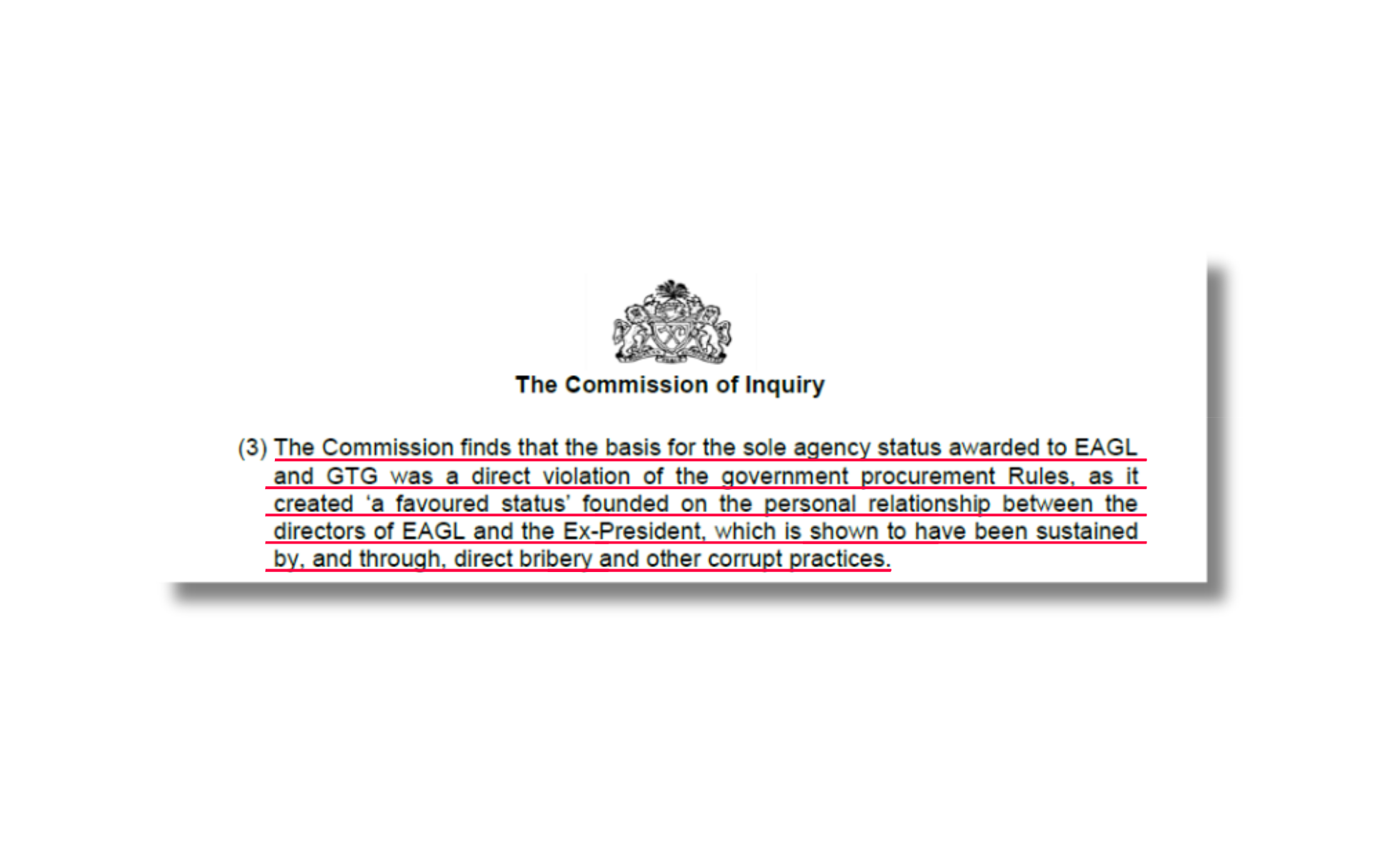
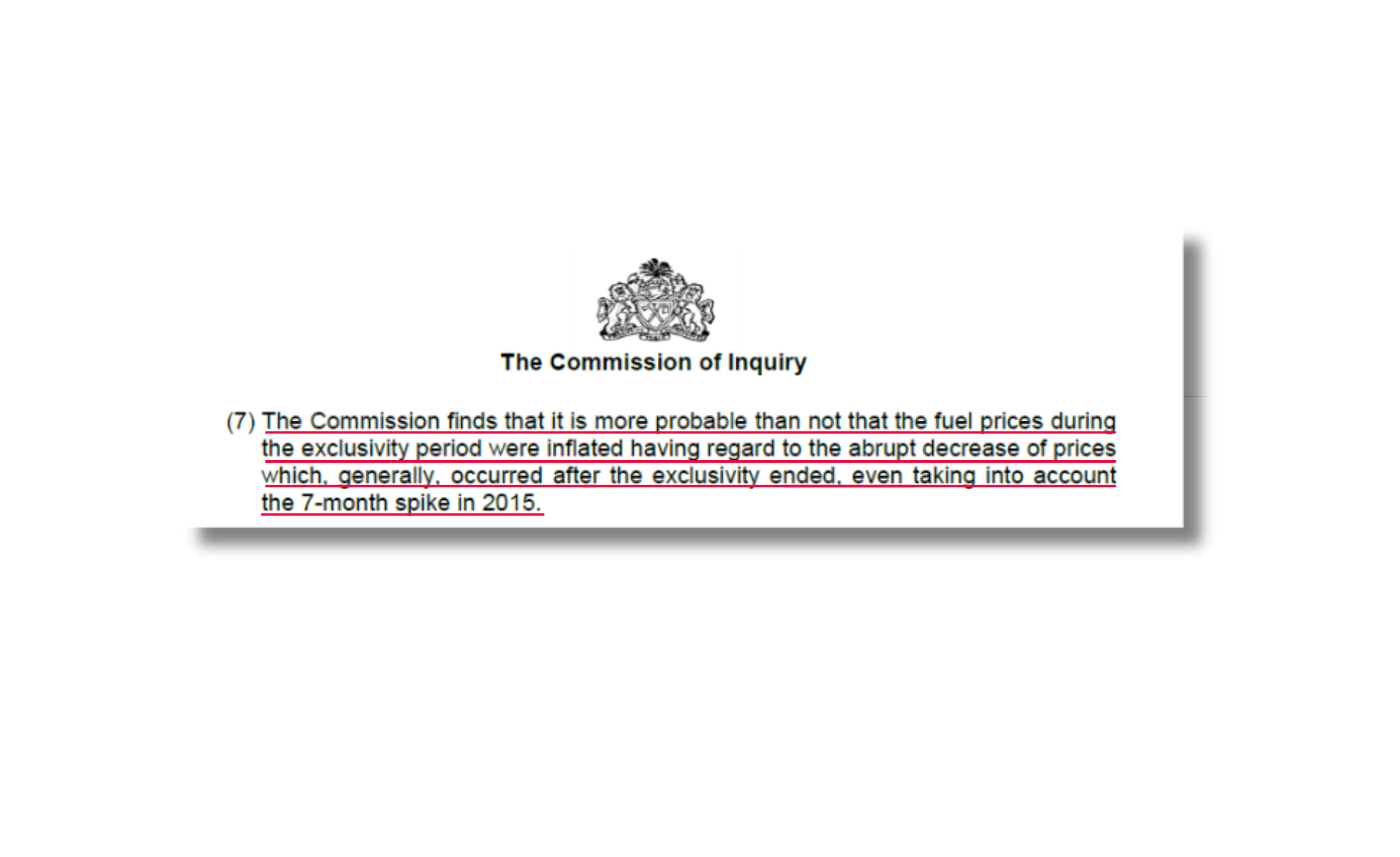
The Commission concluded that the sole-agency mandates granted to GTG and EAGL amounted to “a favoured status” that was “shown to have been sustained by, and through, direct bribery and other corrupt practices.” It further stated: “It is more probable than not that the fuel prices during the exclusivity period were inflated having regard to [sic] the abrupt decrease of prices which, generally, occurred after the exclusivity ended.” At the end of its work, the Commission recommended, among other measures, the confiscation and sale of assets improperly acquired by Jammeh and Bazzi; the initiation of criminal proceedings against the former president for “theft, economic crimes and corruption”; and the banishment from The Gambia of the intermediary and his companies. The recommendations were accepted by the Gambian government but have not yet been fully implemented. President Adama Barrow’s administration, already under parliamentary scrutiny over the former dictator’s frozen assets, faces backlash from civil society for allegedly mimicking the corruption of the past regime.
Bazzi teams up with Total
After at first becoming NAWEC’s strategic partner, Bazzi’s company EAGL progressively extended its influence, and became the exclusive importer of all petroleum products in The Gambia – a veritable jackpot.
The businessman lacked however the capacity to source products on the international market. According to the Commission of Inquiry, which based its findings on documents and witness testimony, this is how Totsa became EAGL's exclusive supplier of petroleum products, benefiting in turn from a monopoly that would last nearly twelve years.
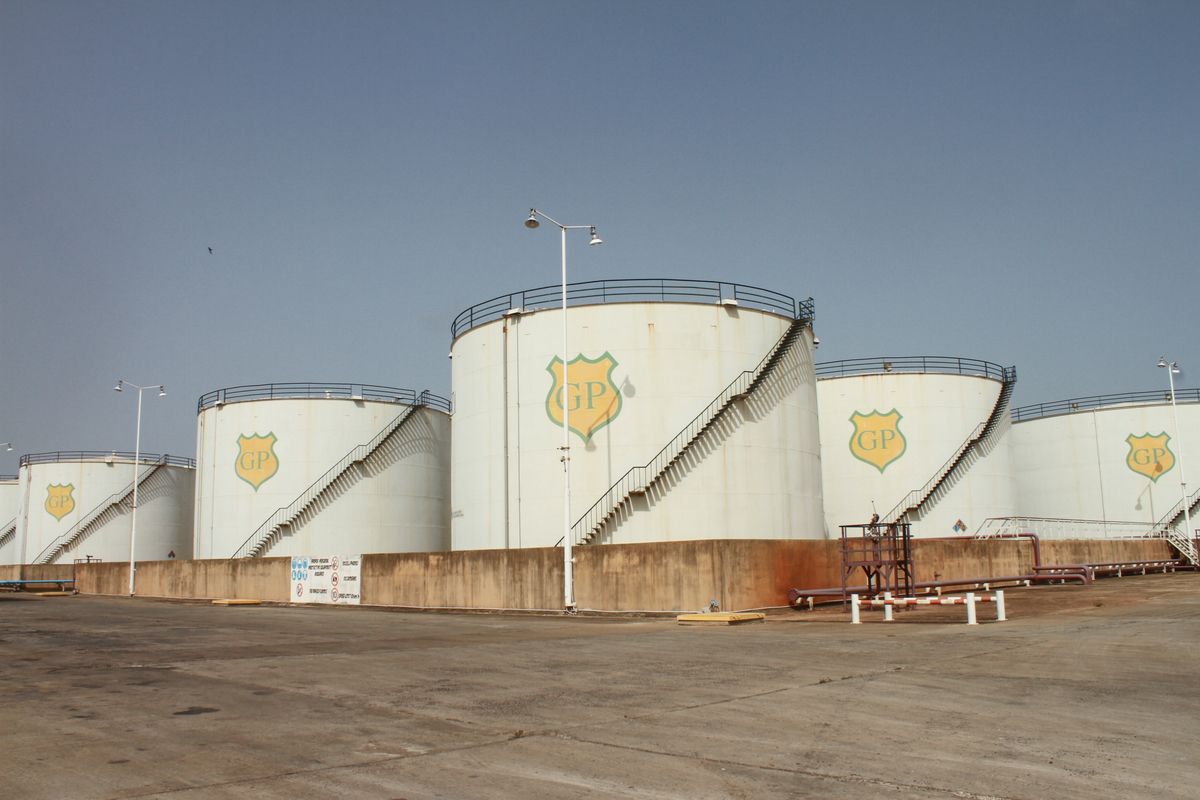
In 2004, Jammeh gave the green light for the construction of a petroleum storage terminal at Mandinari, just a few kilometres from the capital Banjul. Once again, the Belgian-Lebanese intermediary was in on the deal. Gam Petroleum – at the time 99% owned by him (its shareholding structure would later change under very opaque conditions) – obtained, without a tender, a five-year monopoly on operating the site once the facilities were built.
 ©
mope.gm
©
mope.gm
A ‘state-of-the-art’ petroleum facility
The cost of the depot was estimated at $50 million. This time, Total was called in to help out as a banker. According to Bazzi’s testimony before the Commission of Inquiry, Total International Ltd. – then a subsidiary of the French giant domiciled in Bermuda – agreed to co-finance the project alongside international banks. When the site was inaugurated in May 2008, it consisted of 17 tanks with a total storage capacity of 51,000 metric tonnes for heavy and light fuel oil or liquefied petroleum gas (LPG). The technology was “state-of-the-art”, according to one Gambian website. The government then ordered that Gam Petroleum's capital be opened up to public companies.
While the Commission’s reports do not specify how much Total invested in the terminal – where it also had tanks to store its products – one thing is clear: relations between the French multinational and Bazzi were excellent at the time. In a letter to Jammeh in December 2010, Bazzi extolled “the strong partnership that we have with Total International, built over several years of close cooperation”.
A contract saved by the bell
The partnership was not without moments of turbulence. From 2009, various palace intrigues threatened to strip EAGL of its mandate as exclusive importer of petroleum products. According to the Commission of Inquiry, in late 2010, Bazzi was allegedly informed by Totsa that another company had been authorised to deliver oil from Venezuela. Panic ensued. The Commission reports that Bazzi wrote to Jammeh to explain that the end of exclusivity had led Total to demand repayment of loans taken out for the construction of the Mandinari depot and to withdraw the non-secured facility EAGL enjoyed to store strategic stock without asking for a letter of credit. Public Eye was unable to independently confirm these exchanges.
Several days later, the president reversed course and extended EAGL’s exclusivity until 2014. In another strange coincidence, the day after the exclusivity was extended, EAGL opened an account for the benefit of a Jammeh family trust. Within a month, $4.1 million had been transferred into the account, enabling the president to buy a property in Potomac, Maryland, for $3.5 million. The property was later forfeited by the US authorities.
A troubling timeline
At the heart of the issue is a $10 million line of credit granted by Total International Ltd. to EAGL, presumably around 2010. Large oil traders commonly make such loans to partners, but given EAGL’s limited financial strength, this especially generous cash advance is striking, since it would carry a clear risk of non-repayment.
EAGL's annual accounts, which Public Eye was able to consult, show that as of December 31, 2012, the entity had used a total of about $4.8 million of the $10 million loaned by the French oil giant: about $2.8 million as of December 31, 2011, and $2 million in 2012.
At the time, NAWEC was struggling to pay its bills, owing to the exorbitant cost of the exclusive contract signed with GTG/EAGL, which enjoyed hefty margins. In May 2010, Bazzi wrote to the Ministry of Energy claiming the public utility owed his company nearly $10 million. Did he draw on Total’s credit line to cover some or all of those arrears?
Other dates also raise questions: from June 2011, with metronomic regularity, EAGL deposited about 15 million dalasi (around $500,000) each month into Jammeh’s salary account. According to the Commission of Inquiry, EAGL’s highly suspicious payments continued until November 2013, totalling $10 million.
For lack of documents, Public Eye has not been able to establish whether the full amount borrowed by EAGL from Total was repaid, nor what the money ultimately financed.
But Bazzi’s businesses continued to prosper. In 2012, EAGL’s exclusivity contract was renewed for a year; in 2013, it was extended again.
End of the ‘special treatment’
In 2013, the relationship between President Jammeh and the businessman soured. In a letter dated 7 May 2013, which Public Eye has also seen, the Minister for Presidential Affairs and Secretary-General notified Bazzi of the government’s intention to cancel his contract with NAWEC and end his monopoly on fuel imports.
“You have been given special treatment and all the other privileges you can think of,” the minister wrote. “As from now on [sic], you will be treated like any investor except that you will be held to stricter accountability as you have proven to be very greedy, dishonest, ungrateful and treacherous.”
The decision to terminate EAGL and GTG’s exclusive contracts was made the following year. The Commission notes that the supplier margins then fell significantly.
$24.2 million of fuel siphoned off
For Total, the early 2010s also marked the beginning of an unsettled period in The Gambia. Despite this, the multinational would eventually manage to come out on top, notably by leveraging its connections at the highest levels.
In 2014, an unforeseen event occurred. EAGL decided to help itself to Totsa’s stock stored at the Mandinari terminal. Without the Swiss trader’s authorisation, the company transferred $24.2 million worth of petroleum products to NAWEC. The official reason given was that there had been a national emergency.
At that time, Gam Petroleum, the depot owner, was held by state-owned companies alongside Bazzi and his associates, who nonetheless controlled 52% of the capital.
The Swiss trader, who was the terminal’s main supplier, filed a complaint with the operator and demanded immediate payment, threatening to seize and sell the warehouse to recoup its losses. The company even wrote to President Jammeh and his Minister of Foreign Affairs.
The government faced a serious dilemma: either reimburse the trader the $24.2 million or risk losing control of Mandinari.
According to the Commission of Inquiry, negotiations were held in Geneva in the presence of the Gambian finance minister, the governor of The Gambia’s central bank and a state-owned shareholder of Gam Petroleum. Totsa‘s claim was allegedly reduced to $18.6 million.
The conflict apparently ended in 2015, when the government decided to “nationalize” the oil depot. According to the Commission, Bazzi and his associates at the time expressed their wish to settle the debt to Total by selling their shares in Gam Petroleum. Ten percent of those shares were ultimately sold to state-owned companies, giving the latter a majority stake. It is unclear whether the proceeds of that sale were actually used to repay Total and how much the multinational was able to recover.
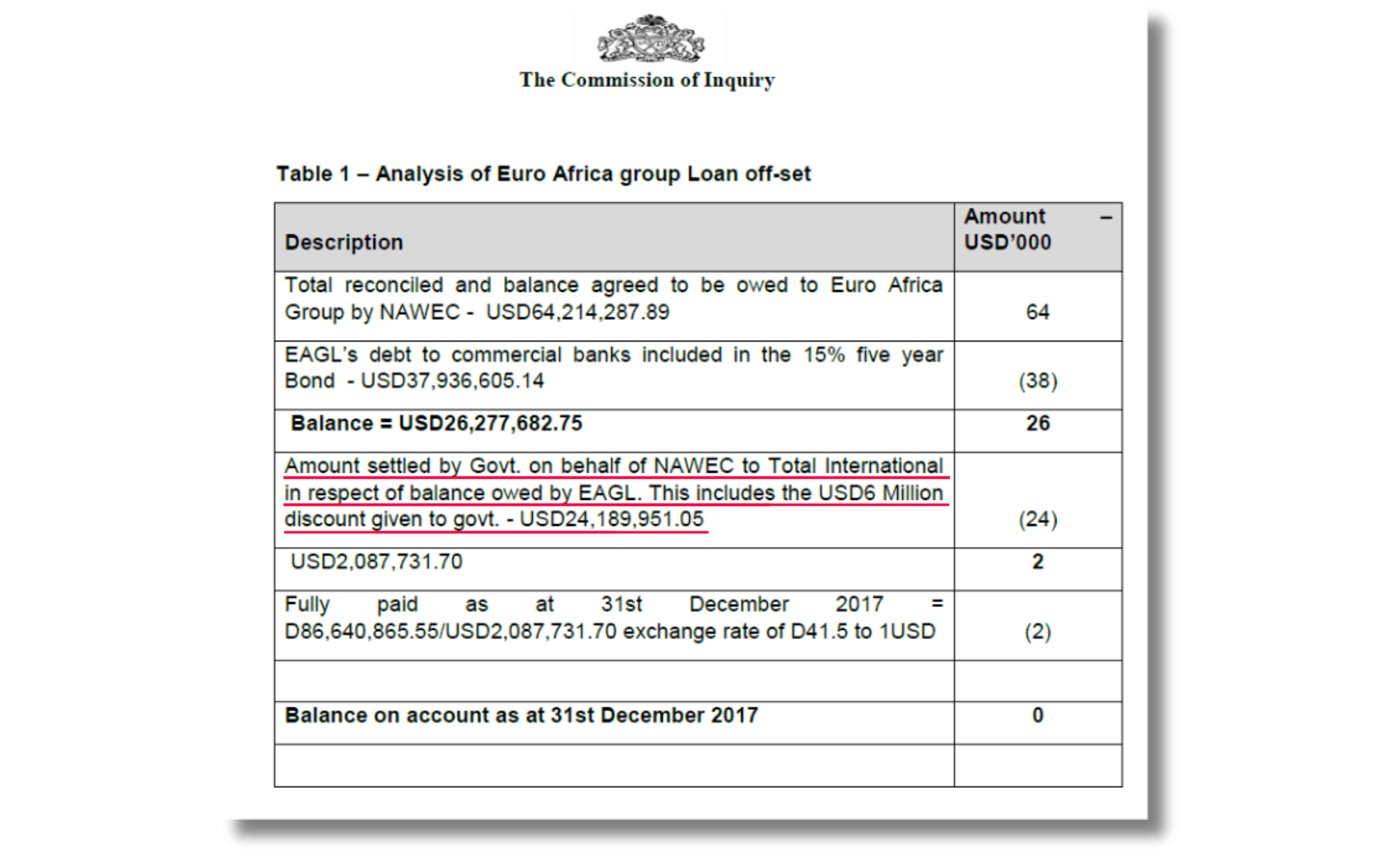
Be that as it may, the debt was transferred to NAWEC, as the Commission explained in its reports. A tally indicates that the government intended to pay nearly $24.2 million to Total International on NAWEC’s behalf for EAGL’s outstanding balance, an amount that “includes the USD6 Million discount given to govt”. According to the Commission, Adama Barrow’s government ultimately transferred nearly 75% of NAWEC’s debts to the Gambian taxpayer the following year. Public Eye was unable to verify these claims.
 ©
Public Eye
©
Public Eye
A major player in a country riddled with corruption
If Total and its Geneva subsidiary Totsa’s dealings with Bazzi became less smooth towards the end of the Jammeh era, the French group was nonetheless, for about a decade, a major player in The Gambia’s highly opaque petroleum sector. As the exclusive supplier of oil products through companies linked to Bazzi and an investor in a brand-new depot where it held storage capacity, it would be hard to deny that Total was doing quite well for itself. This should, at the very least, raise questions in a country where corruption is endemic (126th out of 175 in 2014, according to Transparency International’s corruption perceptions index).
“The Gambia is one of the small markets that offer the potential for very high margins, but which are highly exposed to the risks of corruption,” an oil trading specialist in Africa who wished to remain anonymous told Public Eye.
For Richard Messick, an anti-corruption expert and former operations specialist at the World Bank, “Total has responsibilities to make sure its customers aren't engaged in wrongdoing, especially when dealing with states where corruption is known to be common”. To him, the existence of an exclusive contract obtained without a tender process to supply petroleum products to a public company in Gambia is “more than a red flag" that should have alerted the multinational.
Public Eye sent TotalEnergies a detailed list of questions. The multinational has not responded to our enquiries. Mohammad Bazzi could not be reached for comment despite numerous attempts.