

Chiquita reaps its profits in Switzerland
April 21, 2026
 ©
Keystone / Laurent Gillieon
©
Keystone / Laurent Gillieon
From the small, lakeside city of Etoy, in Switzerland’s Vaud canton, a massive global business has been quietly operating since 2008: Chiquita, the world’s best-known banana company.
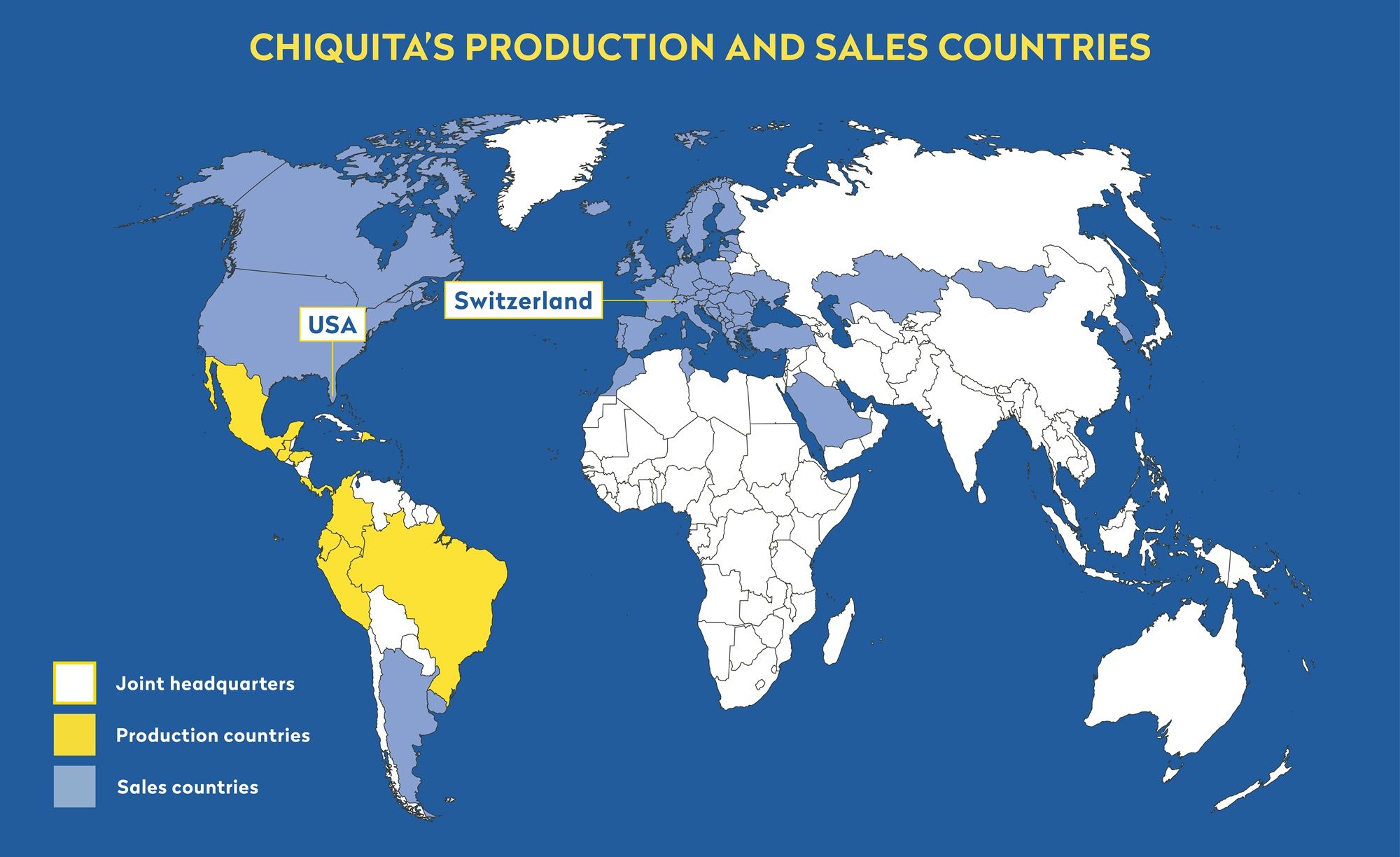
To get its blue-stickered bananas into almost 50 countries, Chiquita relies on a fully integrated value chain. Its dense distribution networks in Europe and North America enable the group to stock supermarket shelves around the world. A company-owned container fleet loaded at Chiquita’s own ports supplies the warehouses needed for the complicated logistics operation. But at the heart of the global business are roughly 70 banana plantations that, according to our research, are operated by Chiquita. These are located in Central America – specifically Costa Rica, Panama, Honduras and Guatemala – as well as in Ecuador.
However, running its own plantations does not, in itself, make Chiquita the world’s largest banana trader. The key to their success lies in 50 suppliers, which are said to account for about 60% of total production – helping the group reach an estimated 2.7 million tonnes of bananas sold each year.
 ©
opak.cc
©
opak.cc
In producing regions, Chiquita sets the pace: in some places, entire villages and towns – along with their infrastructure – depend on income from banana production for the group. The scale of this imbalance of power was on display in Panama in 2025. After nationwide protests against a social reform, Chiquita decided to sack about 6,500 people and halt all production. Only after lengthy negotiations was the government able to persuade the company to reverse course. Given the multinational’s conflict-ridden history stretching all the way back to 1899, it wouldn’t have been the first time Chiquita had abruptly withdrawn from a rebellious region after that region had come to rely entirely on banana production for the corporation.
A dazzling business
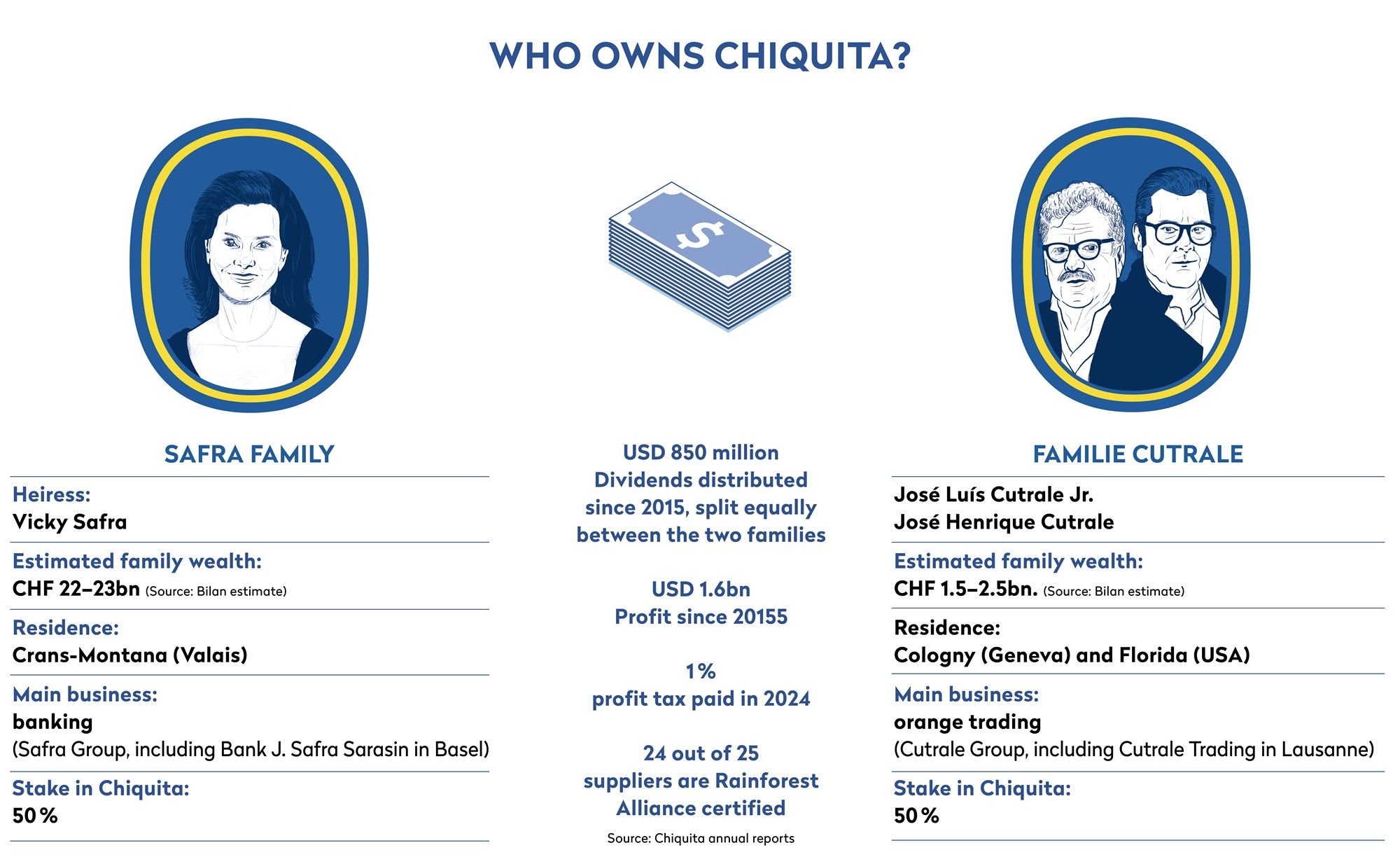
Chiquita’s tight grip on both the value chain and growing regions pays off for the company and its shareholders. Since 2015, Chiquita has made more than $1.6 billion in profit. That same year – 2015 – the global leader in banana trading was bought by the Brazilian billionaire families Safra and Cutrale, who split the sale down the middle, and taken off the stock market. While Chiquita has since paid out dividends of $850 million to the owning families, the public has learned little about its business activities since the privatisation. Members of both families – one of which made its fortune in banking and the other in oranges – now live in Switzerland and rank among the country’s 300 richest people.
For Chiquita, Switzerland offers a highly attractive tax environment. Taking advantage of a deal that offered – even by Swiss standards – a laughably low 2.5% corporate profit tax rate, Chiquita moved its European headquarters from Belgium to the shores of Lake Geneva in 2008. Although that arrangement expired in 2018, the company was able to continue its low-tax strategy until 2024, when it paid taxes at a rate of just 1%. Between 2015 and 2024, the multinational banana conglomerate paid an average effective tax rate of 6.8%.
 ©
opak.cc
©
opak.cc
Switzerland also plays a central role in operations. Along with the company’s offices in Florida, the Etoy site now forms Chiquita’s official joint headquarters. From Vaud, the group runs its entire European banana business. Other core activities are carried out in parallel in the US and Switzerland. While company reports show that the plantation management is structured alongside the US business via a Swiss holding company, everything else that happens behind the glass doors in Etoy remains highly secretive.
Closing the chapter on the company's violent history?
What is no longer secret is the violent history of the US banana giant, known until 1984 as the United Fruit Company. “Its long history was not always something to be proud of,” the multinational admits at the start of its sustainability report. The company’s initiative aimed at drawing a line under the era when it controlled corrupt governments in Latin America to enforce its interests is called “Behind the Blue Sticker”. It’s the flip side of another term it had helped to coin: “banana republic”. The examples of historical abuse are numerous – enough to fill entire books: from orchestrated coups and massacres of banana workers to the large-scale environmental destruction caused by pesticides. Most recently, in 2024, in a landmark US ruling, Chiquita was found liable for financing Colombian paramilitaries.
With about 20,000 employees worldwide, the company says it now wants to look ahead. Pay is a central pillar of its current sustainability strategy. After decades of notoriety for union busting, it now proudly reports on the high levels of worker organisation and on collective bargaining agreements. Chiquita says it pays living wages on its own plantations, above the benchmark set by the Global Living Wage Coalition (GLWC). But 85% of Chiquita’s own plantation workforce are day labourers, a precarious form of employment that is particularly vulnerable to insecure working conditions and income. What’s more, the company’s promises apply only to one side of Chiquita’s production system: the plantations owned by the company. Workers at its many supplier farms appear to be entirely left out of the sustainability targets.
Responsibility through certificates
For its supplier farms, Chiquita says it ensures compliance with minimum social standards through certification processes. The key tool is what Chiquita describes as the “rigorous” Rainforest Alliance (RA) standard. Of its 25 suppliers of non-organic bananas, 24 are RA-certified. Additionally, independent plantation audits are meant to ensure that labour rights are guaranteed under international standards, including, for example, paying at least the national minimum wage and allowing the free exercise of trade union rights. Plantation operators are also expected to meet environmental criteria, such as limiting pesticide use.
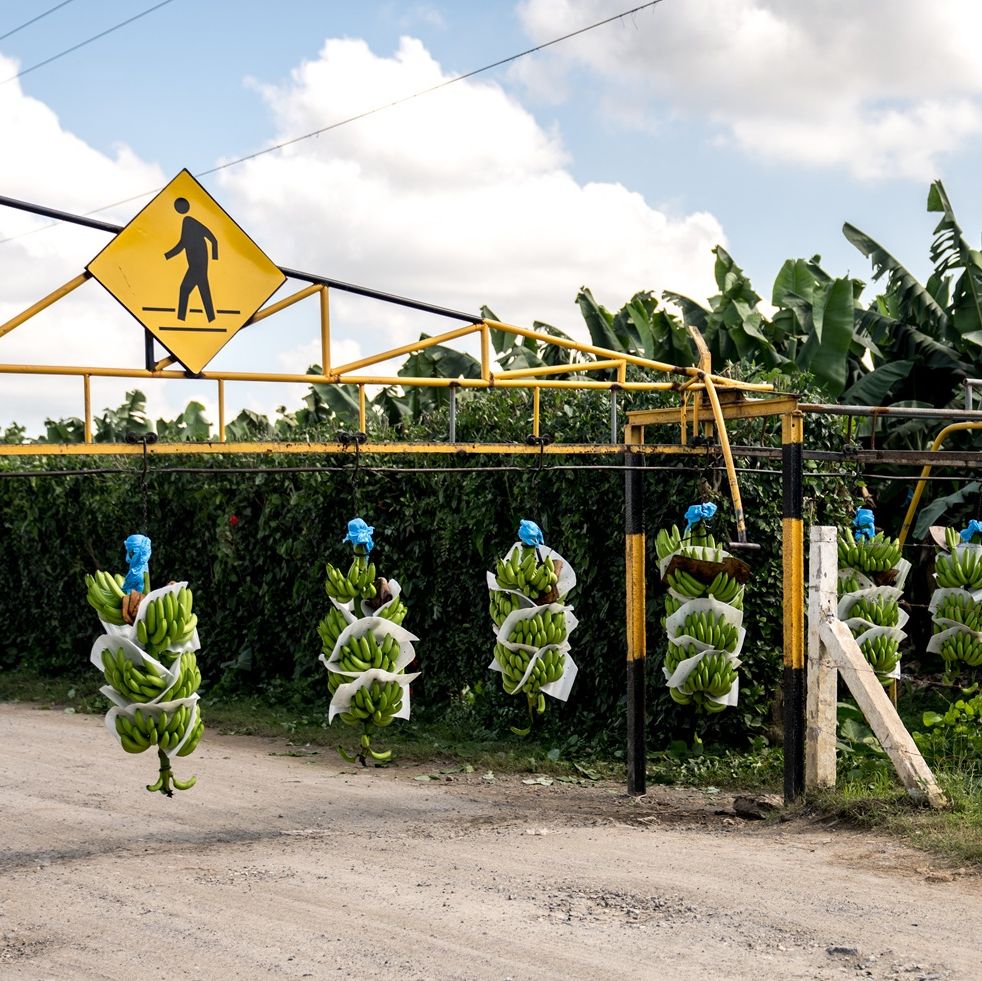
But RA – the widely recognizable label depicted in form of a green frog – has been criticised for some time. In 2016, Banana Link, a UK-based NGO that campaigns for fair trade in the banana industry, released a report showing how Chiquita suppliers had failed to guarantee even basic trade union rights and paid below the nationally mandated minimum wage. Those allegations match with the conditions Public Eye documented in Guatemala in November 2025.
 ©
©Toxic bananas: Chiquita’s broken bodies
According to a 2022 analysis by the University of Exeter, there is little evidence that RA effectively contributes to more sustainable banana production. Asked for comment, Rainforest Alliance said: “Certification can serve as a valuable tool in identifying and tackling critical issues in agricultural supply chains, but to effectively address deeply rooted sustainability issues, especially in medium and high-risk geographies for labor and human rights violations, a multi-faceted approach is needed.” Chiquita did not respond to Public Eye’s request for comment.
To this day, Chiquita has struggled to credibly put an end to its exploitative business model. While thousands of workers continue to endure precarious conditions, a small number of people benefit from systematic wage dumping and a tax-optimised corporate structure. Since 2008, Switzerland has been part of that system, too. In return for its small share of Chiquita’s proceeds, it offers the company optimal conditions for a business model that remains deeply problematic.
More infos
-
The catch with bananas: monocultures & pesticides
Around the world, virtually only one type of banana is grown for export: the Cavendish. That means the fruits are near-identical clones, with almost no genetic diversity. This is compounded by the fact that these bananas are produced on vast monoculture plantations, leaving the Cavendish highly vulnerable to pests and disease. The banana industry tries to counter this with intensive pesticide use. In fact, few agricultural sectors use more of these worldwide. Pesticides pollute soils and groundwater and are extremely dangerous for both plantation workers and communities living nearby. More than half of all pesticides are applied in the global South – including many so hazardous they have been banned in Switzerland and the EU. For economic and structural reasons, the global banana industry remains wedded to the monoculture. Over the years, global supply chains have been optimised for the Cavendish. Diversification and more sustainable production methods would involve higher costs and, therefore, lower profits.
-
Extreme price pressure in the supply chain
Price pressure on bananas, which often cost less than a locally grown apple, is also intense. To keep prices as low as possible, the squeeze is put on the weakest link in the supply chain: plantation workers. Production tends to concentrate where labour is cheapest – places where trade unions are unable to demand decent pay and suppliers hire day labourers to maximise working hours and push conditions below international standards. Alongside the global banana giants – including Chiquita, Fresh Del Monte, Fyffes and Dole (who all but Dole have significant operations in Switzerland) – major retailers share responsibility. Supermarkets take on average 41% of the price of a banana as margins, while plantation workers receive only 7%. In most cases, that tiny fraction is not enough for workers to earn a living wage.