

Who profits from our bananas – and by how much
April 21, 2026
 ©
Tomás Ayuso / Panos Pictures
©
Tomás Ayuso / Panos Pictures
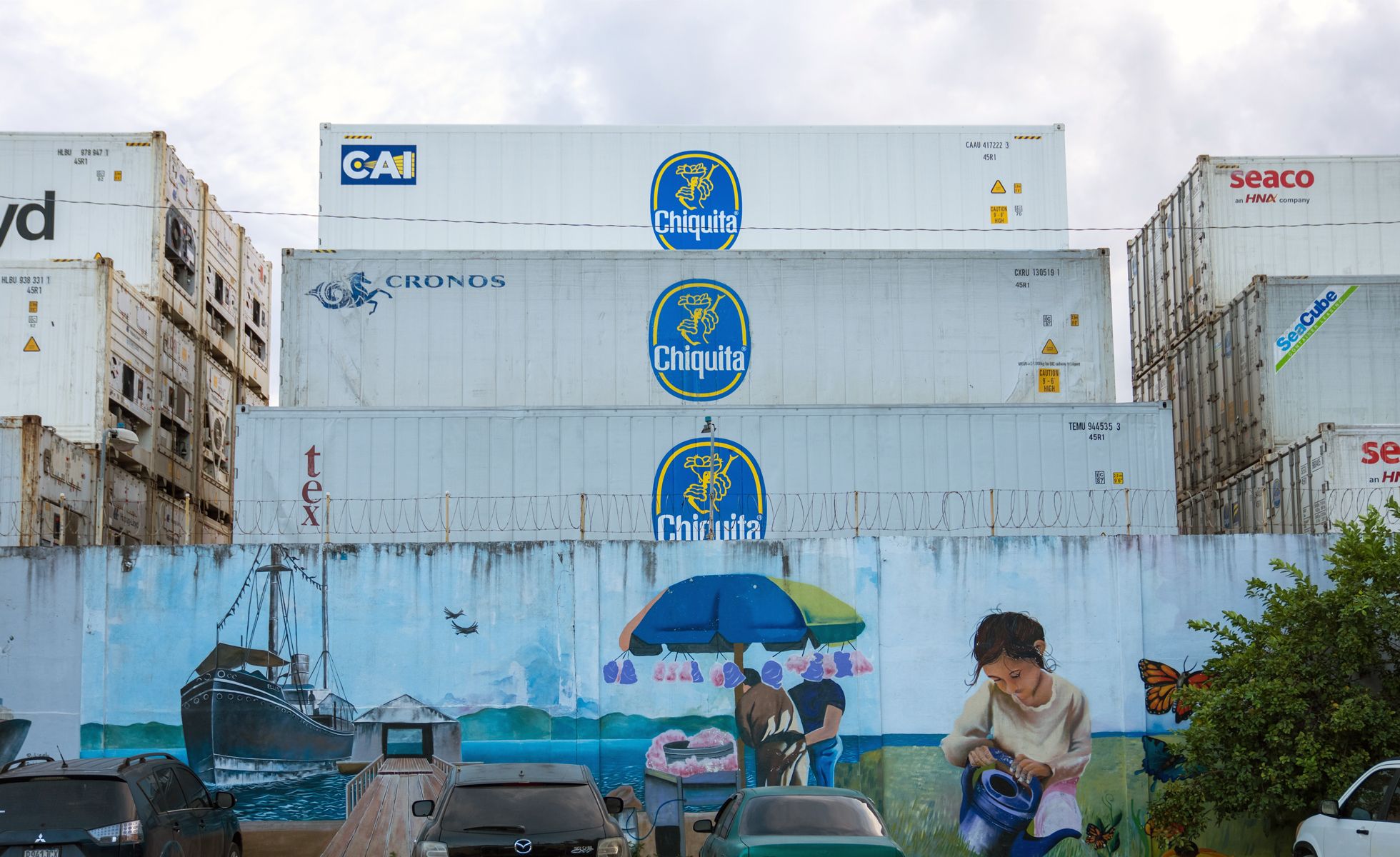
For hundreds of thousands of banana workers, each day follows the same relentless rhythm. On plantations, men cut the heavy bunches – weighing dozens of pounds – from tropical plants at piecework pace, hauling them on cable lines to the packing sheds. There, another group of labourers, this one mostly women, trim the fruit, wash it and sort it by size and quality into cartons. That same day, the still-green bananas are stacked and loaded into refrigerated containers to begin their long journey to Europe.
By the time the bananas reach our supermarket shelves, the fruit has already travelled a long way. First, the shipment goes by lorry to the port, then by ship across the Atlantic. The trip from Puerto Bolívar in Ecuador – some 10,000km away – to Antwerp or Hamburg takes about two weeks, for example. From there, the fruit moves on to warehouses, where importers coax out the bananas’ yellow colour with warm, humid air and gas that helps accelerate the ripening.
Snacking on a banana is part of the daily routine for many people in Switzerland. Whether it’s at breakfast, between meals or on a hike, the average person in Switzerland eats 100 bananas a year. On average, 37 of those were grown in Colombia and 30 in Ecuador, while the rest come from Panama, Peru or any number of other countries from which Switzerland imports the popular tropical fruit. Every other banana now comes from Fairtrade production; almost one in three is certified organic. No other country consumes as high a share of sustainably produced bananas.
More infos
-
The catch with bananas: monocultures & pesticides
Around the world, virtually only one type of banana is grown for export: the Cavendish. That means the fruits are near-identical clones, with almost no genetic diversity. This is compounded by the fact that these bananas are produced on vast monoculture plantations, leaving the Cavendish highly vulnerable to pests and disease. The banana industry tries to counter this with intensive pesticide use. In fact, few agricultural sectors use more of these worldwide. Pesticides pollute soils and groundwater and are extremely dangerous for both plantation workers and communities living nearby. More than half of all pesticides are applied in the global South – including many so hazardous they have been banned in Switzerland and the EU. For economic and structural reasons, the global banana industry remains wedded to the monoculture. Over the years, global supply chains have been optimised for the Cavendish. Diversification and more sustainable production methods would involve higher costs and, therefore, lower profits.
The cheapest of these bananas currently cost about 1.20 francs per kilo; for organic bananas, shoppers pay around 3 francs. But the price tag hides the fact that, across the supply chain, those making the most money from the Swiss public’s second-favourite fruit after apples often have little or nothing to do with growing it. The percentage of profits that ends up with pickers, traders and transport firms, respectively, varies by country of origin, negotiated contracts and certifications. But plantation workers consistently receive only a small share of the overall proceeds: on average about 7%. Plantation owners (13%) and importers (19%) tend to take home a far greater share. The main beneficiaries, however, are retailers like Migros and Coop, which account for around 41% of the sale price.
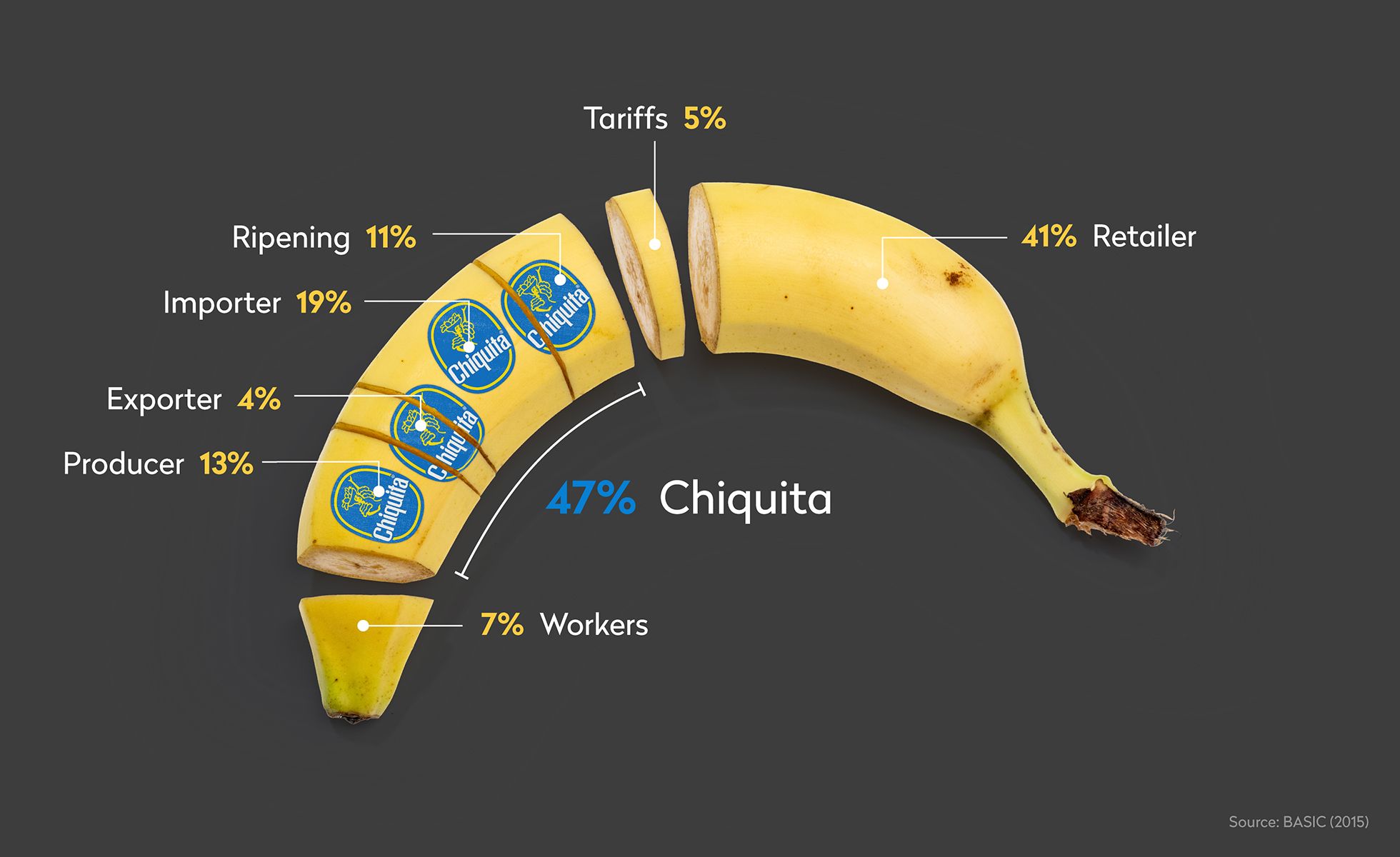
For groups such as Chiquita, Del Monte or Dol, bananas remain an appealing business largely because, through various subsidiaries, the companies are able to control multiple steps in the production process. Not only do they conduct hard-nosed wage negotiations, but they also have unrivalled insight into the industry. This integrated value chain – typical of agricultural commodity trading – allows the various groups to secure earnings across the process: from the plantations through to the container ships and the ripening facilities. This gives Chiquita and its rivals a share of the total revenue that’s comparable to that of the supermarkets.
For banana traders, business operates on a schedule different from their workers. These companies decide the fate of several million tonnes of fruit each year: where it comes from, where it goes, and even when it ripens. And, from one quarterly result to the next, they see just how much this pays off.
Switzerland as a banana hub
The global banana trade is dominated by a handful of vertically integrated groups. Estimates suggest the biggest four control about 44% of the business, which is why competition is considered limited. As with many commodities, Switzerland plays a central role here. Alongside Chiquita, Fyffes has its headquarters in the Lake Geneva region and Fresh Del Monte operates its trading hub in Zug.
On account of its key role in agricultural commodity trading, Switzerland has particular influence in the banana sector, too. Labels give shoppers a clue about socially and environmentally responsible banana consumption, but a far bigger lever for protecting human rights and the environment in banana production lies in effective regulation of multinational companies.